Cardiac Testing

What to Expect and How to Prepare
Contents
Cardiac tests can tell your healthcare team a lot about how your heart is doing—helping diagnose issues, guide treatment, and track progress. If you have an upcoming test, you may be wondering how to prepare and what the experience will be like. Whether it’s an echocardiogram, a stress test, or another diagnostic study, knowing what’s ahead can help you prepare and feel ready.
In this post, we’ll guide you through a range of studies commonly used to evaluate and manage heart health. We’ll cover how to prepare, what to expect, and offer tips to make the process as smooth as possible.
Cardiac Imaging
Cardiac Computed Tomography (CT)
What is a cardiac computed tomography (CT) scan?
A cardiac CT scan uses X-rays and a computer to create detailed images of your heart and blood vessels. It helps detect coronary artery disease, calcium buildup, blockages, or structural heart issues.
There are two main types of cardiac computed tomography (CT):
Cardiac CT for Coronary Artery Calcium (CAC) Score. This CT test measures the density of calcium in the coronary arteries and is used as a screening test in patients who have intermediate risk for coronary disease (plaque buildup in the arteries) to help guide treatment decisions, such as whether to start cholesterol-lowering medication. This test usually is not covered by insurance and typically costs $150 to $300 out of pocket. Be sure to confirm the price with the testing facility in advance.
Coronary CT Angiogram (CCTA). This CT scan uses contrast dye to visualize the coronary arteries and evaluate any narrowing or blockages caused by coronary artery disease (CAD).
Should I fast before the test?
CT for CAC Score: No. In most cases, no fasting is required, and it’s fine to eat and drink as usual before the test. If anything is unclear, check with the testing facility for specific instructions.
CCTA: Yes. You’ll typically be asked to avoid all food and drink—except plain water—for 4–6 hours before the test to help ensure clearer images. If you have diabetes, consult with the testing facility beforehand about any adjustments to your insulin regimen that may be necessary on the day of the test.
Should I avoid caffeine before the test?
CT for CAC Score: There are generally no caffeine restrictions for this test unless your provider advises otherwise.
CCTA: Yes, you should avoid all caffeine for at least 12 hours–and ideally 24 hours–before the scan, as caffeine can increase your heart rate and affect image quality.
If I take regular medications, should I continue taking them before the test?
CT for CAC Score: Yes
CCTA: It depends:
Take medications as prescribed unless your provider advises otherwise.
If you're not already on heart rate-lowering medications (such as beta blockers), your provider may prescribe them before the test to help slow your heart rate for better image quality.
What should I wear?
Wear loose, comfortable clothing. You may be asked to change into a patient gown.
Any clothing with metal fasteners, like buttons or zippers, will need to be removed before the CT scan, so try to avoid wearing those items. To make things easier, it's a good idea to leave your jewelry and valuables at home.
Will I receive contrast dye?
CT for CAC Score: No
CCTA: Yes. CCTA scans usually involve injecting an iodine-based contrast dye through an IV to get a clearer view of your heart and blood vessels.
Be sure to tell the testing facility ahead of time if you have:
A history of allergies to contrast dye, or
Kidney problems.
Is the test painful?
CT for CAC Score: No. The scan is quick and painless.
CCTA: No, but you might experience:
A brief pinch when the IV is inserted
A brief warm sensation or metallic taste in your mouth when the contrast dye is injected.
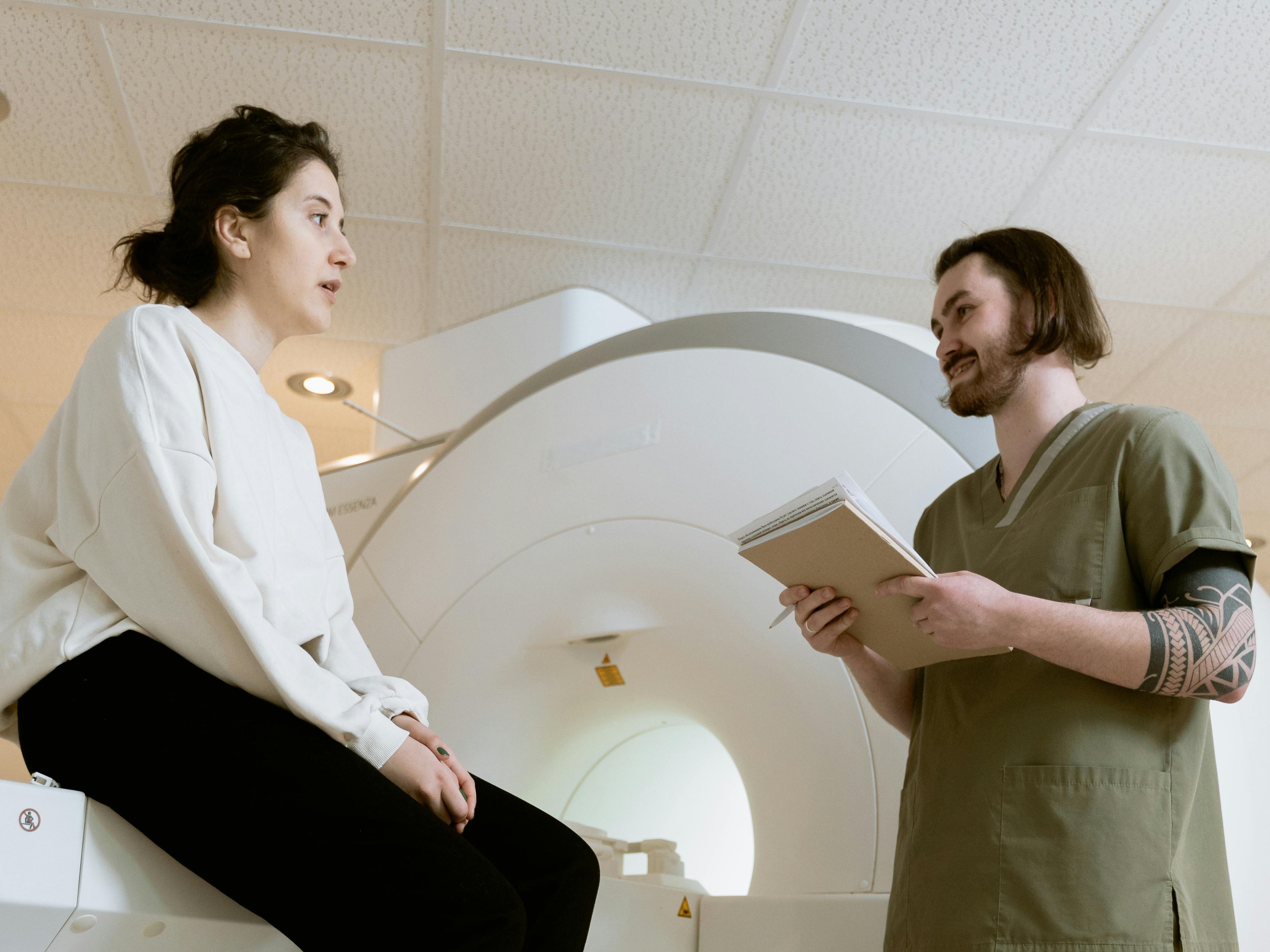
Cardiac Magnetic Resonance Imaging (MRI)
What is a cardiac MRI?
A cardiac MRI uses powerful magnets and radio waves to create detailed, 3D images of the heart. It allows clinicians to evaluate the heart’s structure, function, and tissue composition without using X-rays or radiation.
Cardiac MRI helps assess:
Heart muscle damage after a heart attack
Inflammation or scarring (such as in myocarditis or sarcoidosis)
Congenital heart defects
Cardiomyopathies (e.g., arrhythmogenic, dilated, hypertrophic, or restrictive)
Blood flow and heart valve function.
It’s often ordered when echocardiogram or CT results need further clarification or when precise tissue characterization is needed.
Should I fast before the test?
No. In most cases, no fasting is required for a cardiac MRI, and it’s fine to eat and drink as usual before the test.
However, if the test includes contrast (gadolinium) or a medication to stress the heart (stress cardiac MRI), you may be asked to avoid all food and drink—except plain water—for 4–6 hours beforehand.
If anything is unclear, check with the testing facility for specific instructions.
If I take regular medications, should I continue taking them before the test?
Yes, take medications as prescribed unless your provider advises otherwise.
What should I wear?
Wear loose, comfortable clothing. You may be asked to change into a patient gown.
Avoid wearing items that contains metal–such as some buttons, hairpins, snaps, underwire bras, or zippers–since metal can interfere with the MRI’s magnetic field. To make things easier, it's a good idea to leave your jewelry and valuables at home.
Will I receive contrast dye?
Some cardiac MRI studies involve an injection of gadolinium-based contrast dye through an IV. This helps visualize blood flow, scar tissue, and areas of heart muscle damage. Gadolinium contrast is different from the contrast typically used for coronary CT angiograms.
Let your provider and the MRI staff know ahead of time if you have:
A history of allergies to contrast dye,
Kidney problems, or
Have any implanted or retained metal in your body.
Is the test painful?
No, the MRI itself is painless. However, some people experience:
A brief pinch when the IV is inserted (if applicable)
A cool sensation when contrast dye is given (if applicable)
Mild discomfort from lying still during the scan (usually 30–90 minutes)
Claustrophobia in the MRI scanner (if this is a concern, tell the testing facility—mild sedatives can help).
Anything else to know?
MRI uses a very strong magnetic field to create detailed images. This magnetic field can cause metal inside the body to move or heat up, which may lead to injury or interfere with image quality. Let the testing facility staff know in advance if you have any metal in your body, such as:
Pacemakers or defibrillators
Metal implants or surgical clips
Artificial joints
Shrapnel, bullets, or metal fragments in the body.
The MRI machine makes loud tapping or thumping sounds during the scan. Facilities often provide ear protection or headphones, but it’s a good idea to check in advance—and if you’re sensitive to noise, consider bringing your own earplugs.
It’s also important to lie as still as possible throughout the scan to help ensure clear, accurate images.
Cardiac Positron Emission Tomography (PET) Scan
What is a cardiac positron emission tomography (PET) scan?
A cardiac PET scan is a specialized imaging test that helps assess the metabolic activity of the heart. It involves injecting a small amount of a radioactive tracer called fluorodeoxyglucose (FDG) into the bloodstream. This test is particularly useful in evaluating conditions like cardiac sarcoidosis, where certain areas of the heart muscle may be inflamed or abnormally active.
A cardiac PET scan involves special preparation steps, which differ from those for full-body PET scans. The FDG tracer used in cardiac PET acts like glucose and is taken up by tissues that are using sugar for energy. If you’ve recently eaten carbohydrates, your healthy heart muscle will also absorb FDG, making it harder to identify abnormal areas. To prevent this, before the scan we shift the heart to using fat instead of sugar for energy (since the heart can use either). This is done through a specific diet and fasting protocol that ensures only heart tissue that is abnormally metabolically active—such as inflamed or diseased areas—absorbs FDG and appears on the scan.
Should I fast or follow a special diet before the test?
Yes. You’ll need to follow a high-fat, no-carb, zero-sugar diet for 2 to 3 days leading up to your cardiac PET scan. Then, you’ll need to fast for 4 to 18 hours before receiving the FDG injection. During this time, be sure to stay hydrated by drinking plenty of plain water. You may also drink black coffee or tea.
Here’s a general guide to what you can and can’t eat in the 2–3 days leading up to your scan. Keep in mind, this list isn’t exhaustive. Also, be sure to check labels carefully for hidden carbs or added sugars, especially in processed or packaged foods.
Foods to Eat (High-Fat, No-Carb, Zero-Sugar):
Avocados
Cheese
Eggs
Fish & seafood
Heavy cream
Meats
Oils & fats (e.g., avocado oil, butter, coconut oil, olive oil).
Foods to Avoid (Carbs and Sugars):
Alcohol (e.g., beer, cocktails, liquor, wine)
Artificial sweeteners (e.g., Stevia, sucralose, aspartame, and sugar alcohols) often found in "sugar-free" products
Beans and legumes (e.g., black beans, chickpeas, lentils)
Bread, cereal, oatmeal, pasta, and rice
Dairy products with natural or added sugar (e.g., flavored yogurt)
Fruit and fruit juices (e.g., dried fruits, smoothies)
Starchy vegetables (e.g., carrots, corn, peas, potatoes, squash)
Sugary drinks (e.g., energy drinks, fruit punch, soda, sports drinks, sweetened coffee)
Sweets and desserts (e.g., cake, candy, cookies, chocolate, pastries).
The goal of this diet is to shift your body into a metabolic state called ketosis, where your body primarily burns fat for energy instead of carbs. This process helps your heart use fat as fuel, which makes it less likely to absorb the FDG injection unless there’s abnormal activity, such as inflammation. This makes it easier for the scan to pinpoint any issues. If the preparation isn’t followed closely, your heart may absorb the FDG evenly, which can make the scan less accurate or even require it to be repeated.
Should I avoid caffeine before the test?
Caffeine should be avoided for at least 24 hours before the cardiac PET scan, as it can affect test results.
Should I avoid nicotine?
It’s best to avoid all nicotine products since no amount is safe for your heart.
If you do use nicotine, make sure to avoid it for at least 12 hours before the cardiac PET scan, as it can affect the test results.
If I take regular medications, should I continue taking them before the test?
It depends. Some medications, such as diabetic medications, might need to be paused. Be sure to check with the testing facility for personalized instructions.
What should I wear?
Wear loose, comfortable clothing. You may be asked to change into a patient gown.
Any clothing with metal fasteners, like buttons or zippers, will need to be removed before the cardiac PET scan, so try to avoid wearing those items. To make things easier, it's a good idea to leave your jewelry and valuables at home.
Will I receive contrast dye?
No, FDG is a radiotracer, not a contrast dye. FDG is used to highlight areas of high cell activity (as with infection or cancer).
Is the test painful?
No, the PET scan itself is painless. But you might experience:
A brief pinch when the IV is inserted
A brief cold sensation as the tracer moves up your arm.
Cardiac Stress Test
What is a cardiac stress test?
A cardiac stress test helps your provider assess how your heart performs under physical stress. It’s commonly used to evaluate for ischemia (reduced blood flow to the heart muscle), exercise tolerance, rhythm disturbances, or conditions like aortic stenosis (narrowing of the aortic valve). Stress can be induced in two main ways:
Exercise: You’ll do physical activity—usually walking or running on a treadmill, or pedaling on a stationary bike. This gets your heart rate up and mimics the stress your heart faces during everyday activities.
Medication: If you can’t exercise, healthcare providers can use medication to simulate the effects of physical activity.
Two common medication-based stress tests are:
i) Dobutamine: Dobutamine increases both your heart rate and oxygen demand, simulating the effects of exercise. This helps identify areas of the heart that aren’t receiving enough blood flow when the heart is under increased strain.
ii) Lexiscan (regadenoson): Lexiscan works by dilating healthy coronary arteries. However, narrowed or abnormal arteries may not respond properly, leading to uneven blood flow. This mismatch can highlight areas of the heart that are underperfused (meaning regions that aren't getting enough blood flow), which could indicate the presence of coronary artery disease.
Some stress tests are paired with imaging such as an echocardiogram or nuclear imaging.
During a cardiac stress test with nuclear imaging (e.g., PET, SPECT), a small amount of radioactive tracer, such as Rubidium, is injected into your bloodstream via an IV during peak exercise. After the exercise portion, you’ll lie still under a special camera that captures high-resolution images of your heart. These images are used to assess heart perfusion, or how well blood is flowing through your heart muscle, especially under stress.
Should I fast before the test?
Yes. In general, you should avoid all food and drink, except plain water, for 4–6 hours before the stress test. This helps prevent nausea during exercise and gives more accurate results.
Should I avoid caffeine before the test?
You should avoid all caffeine for at least 24 hours before your stress test. Caffeine can:
Affect your heart rate and blood pressure, which may lead to inaccurate results
Interfere with the medications used during chemical (pharmacologic) stress tests.
Should I avoid nicotine?
It’s best to avoid all nicotine products since no amount is safe for your heart.
If you do use nicotine, make sure to avoid it for at least 12 hours before the stress test, as it can affect the test results.
If I take regular medications, should I continue taking them before the test?
It depends. Some medications, such as beta blockers or calcium channel blockers, might need to be paused because they can affect your heart rate. Be sure to check with the testing facility for personalized instructions.
What should I wear?
Wear comfortable clothing and athletic shoes, such as sneakers. Avoid tight or restrictive clothing that could limit your movement. Since you may need to remove upper-body clothing for electrode (ECG sticker) placement, consider wearing a two-piece outfit.
Avoid lotions, oils, or powders on your chest the day of the test, as they can interfere with the electrode contact.
Is the test painful?
For exercise-based stress tests:
Most patients tolerate it well. It's common to experience:
Tiredness
Shortness of breath
Mild chest discomfort or muscle fatigue.
For medication-based stress tests:
If your test uses a chemical stress agent or nuclear imaging, an IV will be placed to administer the medication or tracer. You may feel brief discomfort when the IV is inserted.
If your test involves Lexiscan (regadenoson), you may experience temporary sensations such as flushing, lightheadedness, or shortness of breath as the medication dilates your blood vessels. These effects are usually mild and resolve quickly, but be sure to let the staff know about any symptoms you notice.
If you feel anything concerning, let the staff know immediately.
Echocardiogram
What is an echocardiogram?
An echocardiogram (or “echo”) is a noninvasive ultrasound of the heart. It uses sound waves to create moving images of your heart as it beats and pumps blood, providing information about its structure and function.
Should I fast before the test?
No. In most cases, no fasting is required, and it’s fine to eat and drink as usual before the echo. If anything is unclear, check with the testing facility for specific instructions.
Should I avoid caffeine before the test?
There are generally no caffeine restrictions for the echo unless your provider advises otherwise.
If I take regular medications, should I continue taking them before the test?
Yes, take medications as prescribed unless your provider advises otherwise.
What should I wear?
Wear loose, comfortable clothing. You may need to remove clothing from the waist up, so consider wearing a two-piece outfit.
One common question patients ask is whether the gel used during the echo will damage or stain their clothes. It shouldn’t—the gel is water-based and washes out easily if it gets on fabric.
Is the test painful?
No. The echo is non-invasive and painless. You might feel slight pressure from the probe, but no significant discomfort.
Labs
Cardiac Labs
Which cardiac labs should I fast for?
For typical cardiology-related lab orders, fasting is usually required for:
Fasting lipid panel (e.g., cholesterol, HDL, LDL, triglycerides)
Fasting blood glucose (blood sugar).
You’ll generally need to fast for 10–12 hours before these tests. During that time, avoid all food and drinks except plain water or black coffee or tea. If you have diabetes, check with your provider about whether and how to adjust your insulin or other medications while fasting.
Fasting is not typically required for a Basic Metabolic Panel (also known as a Chem 7 or a Chem 8) unless your provider wants the blood glucose, which is part of that panel, to be measured while fasting.
What are Apolipoprotein B (ApoB) and Lipoprotein(a) (Lp(a))?
ApoB and Lp(a) are specific types of blood lipoproteins that provide more detailed information about cholesterol-related risk.
ApoB is a structural protein related to “bad” cholesterol. It’s a better marker of cardiovascular risk than LDL in patients with diabetes, metabolic syndrome, and high triglycerides.
Lp(a) is a genetically determined cholesterol particle that can raise the risk of heart attack and stroke, even when other cholesterol levels are normal.
These tests are sometimes ordered in addition to a standard lipid panel to help personalize your treatment plan.
What is high-sensitivity C-reactive protein (hs-CRP)?
High-sensitivity CRP is a marker of inflammation in the body.
An elevated hs-CRP level is linked to a higher risk of heart attack and stroke, especially when combined with other cardiac risk factors.
What is a lipid profile?
A lipid profile measures the levels of fats (lipids) in your blood, including total cholesterol, LDL (“bad”) cholesterol, HDL (“good”) cholesterol, and triglycerides.
High LDL or triglyceride levels increase the risk of coronary artery disease (CAD), while higher HDL is generally, but not always, protective.
For patients with known coronary artery disease, LDL levels are used to gauge how well treatment is working, with a goal of keeping LDL below 70–100 mg/dL. For patients with moderately elevated LDL (100–150 mg/dL), decisions about treatment depend on other risk factors, such as ApoB, Lp(a), high-sensitivity CRP, coronary calcium score, family history of early heart disease, and comorbidities like diabetes, hypertension, early menopause, or a history of preeclampsia.
What is NT-proBNP
NT-proBNP is a blood test that helps evaluate for heart failure or atrial fibrillation.
Higher levels can suggest the heart is under stress or strain. However, non-cardiac factors—such as kidney disease, liver disease, obesity, and thyroid disorders—can also affect results.
What is a urine albumin-creatinine ratio (UACR)?
UACR measures the amount of protein (albumin) in your urine compared to creatinine.
Protein in the urine can signal kidney disease or damage caused by conditions like high blood pressure or diabetes. Detecting it early helps guide treatment and prevent further progression.
Rhythm Studies
Electrocardiogram (ECG), also known as Elektrocardiogram (EKG)
What is an ECG/EKG?
An ECG is a quick, painless test that records the electrical activity of your heart. It helps detect irregular heart rhythms, heart damage, or other heart conditions.
Should I fast before the test?
No. In most cases, no fasting is required, and it’s fine to eat and drink as usual before the ECG. If anything is unclear, check with the testing facility for specific instructions.
Should I avoid caffeine before the test?
There are generally no caffeine restrictions for ECGs unless your provider advises otherwise.
If I take regular medications, should I continue taking them before the test?
Yes, take medications as prescribed unless your provider advises otherwise.
What should I wear?
Wear loose, comfortable clothing. You may need to remove clothing from the waist up for electrode placement, so consider wearing a two-piece outfit.
Avoid lotions, oils, or powders on your chest the day of the test, as they can interfere with the electrode contact.
Is the test painful?
No, ECGs are non-invasive and painless. You might feel a slight coolness from the adhesive used for the electrodes.
Prolonged ECG/EKG Monitoring
What is prolonged ECG (or EKG) monitoring?
Prolonged ECG monitoring tracks your heart’s electrical activity over a period of time ranging from 24 hours to several weeks. It helps detect irregular heart rhythms (arrhythmias) that may not show up during a short, in-office ECG. Common types include:
Patch monitor (e.g., Bardy, Zio): Worn continuously for up to 14 days.
Holter monitor: Worn continuously for 24–48 hours.
Your provider may recommend it if you’ve had symptoms such as:
Dizziness or fainting
Palpitations or irregular heartbeat
Unexplained fatigue.
It can also help evaluate how well certain heart medications are working.
Do I need to change what I eat or drink while wearing the monitor?
No, there’s typically no need to change your diet while wearing the ECG monitor. If your provider asks you to track symptoms, it can be helpful to note the timing of meals or caffeine in your symptom diary.
If I take regular medications, should I continue taking them during the test?
Yes, take medications as prescribed unless your provider advises otherwise.
What should I wear?
For patch monitors: You can usually wear your regular clothes over the patch.
For Holter monitors: You may need to avoid tight-fitting tops or undergarments that can interfere with wires or the device.
Is the test painful?
No, prolonged ECG monitoring is non-invasive and painless. Some people may experience mild skin irritation where electrodes or patches are applied.
Can I shower or exercise while wearing the monitor?
For patch monitors: Many are water-resistant, but check the device instructions to see if it’s okay to shower while wearing it.
For Holter monitors: Do not shower or get the device wet.
Do I need to do anything in particular while wearing the monitor?
Your provider may ask you to:
Keep a diary of symptoms (e.g., chest flutter, dizziness, fatigue) and note what you were doing when they occurred
Press a button if the monitor has a “record” feature for symptoms
You may need to avoid certain activities (like swimming or heavy sweating), depending on the device.
Sleep Studies
What is a sleep study?
A sleep study is used to diagnose sleep disorders, such as:
Insomnia
Narcolepsy
Sleep apnea.
It monitors things like your brain activity, breathing, heart rate, movements, oxygen levels, and snoring during sleep.
There are are two main types of sleep studies:
In-Lab Sleep Study:
Done overnight at a sleep center
Provides detailed data on brain waves, breathing, movements, and more.
At-Home Sleep Study:
Done in your own bed using a portable device
Primarily checks for sleep apnea
More convenient, but may be less detailed than in-lab testing.
Should I fast before the test?
No, there’s typically no need to change your diet before a sleep study. If anything is unclear, check with the testing facility for specific instructions.
Should I avoid caffeine before the test?
There are generally no caffeine restrictions for this test unless your provider advises otherwise. However, it’s still a good idea for sleep hygiene to avoid caffeine for at least six hours before bedtime.
If I take regular medications, should I continue taking them before the test?
Yes, take medications as prescribed unless your provider advises otherwise.
Be sure to tell your provider if you’re taking any of the following:
Medications for anxiety or heart conditions
Sleep aids
Stimulants
Any substances that may affect your breathing or sleep.
What should I wear or bring?
In-Lab Sleep Study: Bring comfortable sleepwear, your pillow (if preferred), and personal items (e.g., a book, toiletries)
At-Home Sleep Study: Wear comfortable sleepwear.
Is the test painful?
No. The test is painless. You may feel a little awkward wearing the sensors, but most people adjust quickly.
This content is for general informational purposes only and is not medical advice. Talk with your healthcare provider before making any decisions about your health.